
How Do DIN 912 Hex Socket Screws Improve Assembly Precision?
Assembly precision depends on more than machining accuracy. Fastener dimensions, thread fit, head geometry, material grade, and installation torque all influence how accurately components are positioned and secured. In this article, we explain how DIN 912 Hex Socket Screws support precise assembly in machinery, automation equipment, and other industrial applications, and what engineers should check when selecting them.
Table of Contents
- Why Assembly Precision Matters in Industrial Manufacturing
- How DIN 912 Hex Socket Screws Improve Assembly Precision
- Key Specifications That Affect Assembly Accuracy
- Installation Factors That Should Not Be Overlooked
- Where Precision Socket Screws Make a Difference
- How to Select the Right DIN 912 Socket Screws
- How TR Fasteners Supports Industrial Fastener Requirements
- Frequently Asked Questions
Why Assembly Precision Matters in Industrial Manufacturing
In industrial assembly, a small dimensional deviation can create problems throughout an entire mechanical system. A component that is slightly misaligned may increase friction, affect movement, create uneven loading, or cause premature wear during operation.
We have found that fastener selection is an important part of controlling these problems. Engineers often focus on machining tolerances and component dimensions, but the screws used to connect those components also influence assembly consistency.
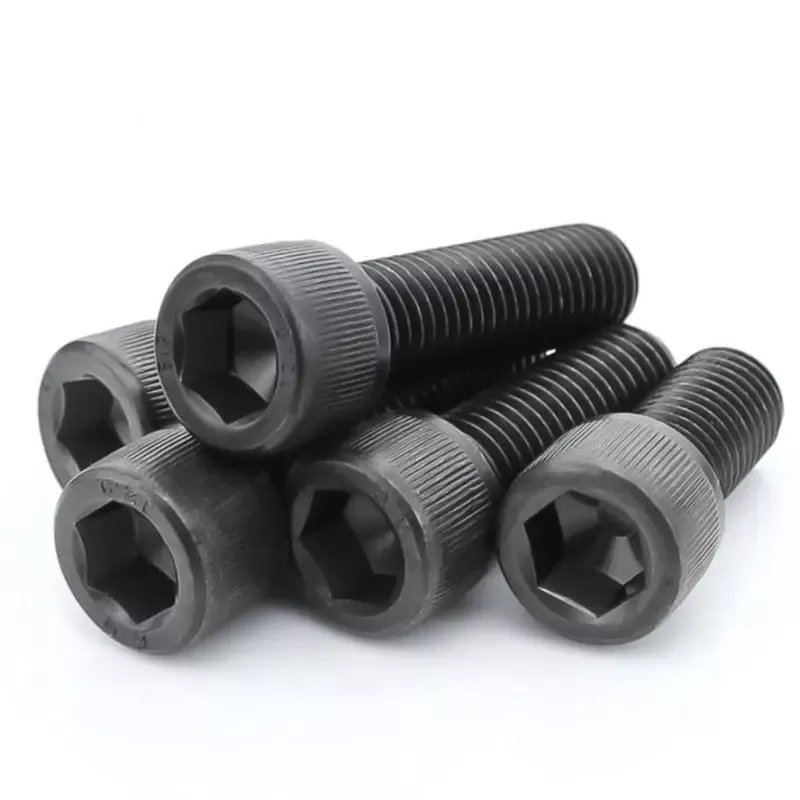
DIN 912 Hex Socket Screws, also known as hexagon socket head cap screws, are widely used in precision machinery because their cylindrical heads and internal hexagonal drives make them suitable for applications with limited installation space.
When the screw dimensions, thread specifications, material grade, and installation conditions are correctly matched to the assembly, they help maintain stable component positioning and repeatable fastening results.
How DIN 912 Hex Socket Screws Improve Assembly Precision
1. Compact Head Design for Accurate Component Positioning
DIN 912 screws feature a cylindrical head with an internal hexagonal drive. Compared with conventional external hexagon bolts, this design requires less clearance around the screw head during installation.
This is particularly useful when fastening components inside machine housings, equipment frames, tooling fixtures, and mechanical assemblies where surrounding structures limit access.
The cylindrical head also provides a defined bearing surface against the connected component. When the mating surfaces are properly machined and the screw is correctly seated, the fastening point can maintain a consistent position without unnecessary interference from the tool or surrounding parts.
2. Internal Hexagonal Drive for Controlled Installation
One practical advantage of hex socket head cap screws is that they can be installed using an Allen key or a hex bit socket. The tool engages inside the screw head rather than around its external profile.
This arrangement makes it easier to access recessed fastening points and use torque-controlled installation tools. In production environments, controlled tightening helps reduce variations between fastening operations.
However, the correct tool size and full engagement are essential. An undersized or worn hex key can damage the socket, while excessive torque may stretch the screw or damage the internal thread.
3. Standardized Dimensions for Consistent Assembly
Dimensional consistency is another important factor. DIN 912 and its successor reference ISO 4762 define the dimensional characteristics of hexagon socket head cap screws, helping engineers specify compatible fasteners for mechanical designs.
Important dimensions include nominal thread diameter, screw length, head diameter, head height, socket width, and thread length. Matching these dimensions to the engineering drawing helps prevent problems such as insufficient thread engagement, head interference, and incorrect seating.
For equipment manufacturers using multiple fastening points, standardized dimensions also simplify replacement, inventory management, and assembly procedures.
4. Appropriate Strength Grades for Stable Connections
DIN 912 Hex Socket Screws are available in different strength grades, including 8.8, 10.9, and 12.9 in our product range. These grades provide different mechanical property levels for different fastening requirements.
For example, grade 12.9 is commonly considered for highly loaded machinery connections where high tensile strength is required. However, selecting the highest available grade is not always the best solution. The connected materials, thread engagement, tightening method, and service conditions must also be considered.
We recommend evaluating the complete bolted joint rather than selecting a screw based on strength grade alone.
Key Specifications That Affect Assembly Accuracy
When specifying DIN 912 Hex Socket Screws, we recommend checking the following parameters before production or procurement. Each specification can influence installation compatibility, fastening reliability, and long-term performance.
| Specification | TR Fasteners Product Options | Effect on Assembly |
|---|---|---|
| Material | Carbon Steel, Stainless Steel | Influences mechanical properties and environmental suitability. |
| Strength Grade | 8.8, 10.9, 12.9 | Determines the mechanical property level of the fastener. |
| Diameter | M3–M56; 1/4–2 inches subject to specification | Must match the designed hole and thread dimensions. |
| Length | 5–500 mm | Affects thread engagement and component clamping. |
| Thread Type | Metric Coarse, Metric Fine, UNC, UNF, BSW, BSF | Ensures compatibility with mating threads. |
| Surface Finish | Plain, Black, Zinc Plated, Yellow Zinc, HDG, Dacromet, Nickel Plated, Brass Plated | Influences corrosion protection and dimensional compatibility. |
| Standards | DIN, BSW, JIS, UNC, UNF, ASME, ANSI, Custom Drawings | Helps maintain compatibility with engineering requirements. |
| Packaging | Bag, Carton, or Customized Packaging | Supports identification, handling, and inventory control. |
Understanding the Relationship Between Size and Fit
Take an M8 DIN 912 socket head cap screw as an example. Its standard coarse thread pitch is 1.25 mm, and the typical ISO 4762 dimensional reference includes a 13 mm maximum head diameter, 8 mm maximum head height, and 6 mm hexagonal socket width.
These dimensions matter when designing a counterbore, selecting an Allen key, and determining the available clearance around the fastening point. If the counterbore is too shallow or the socket clearance is insufficient, installation may become difficult even when the screw itself meets its dimensional requirements.
For this reason, we recommend checking the fastener drawing against the actual component design rather than relying only on the nominal thread size.
Installation Factors That Should Not Be Overlooked
Even a correctly specified screw cannot guarantee precise assembly if the installation process is poorly controlled. In our experience, several practical details deserve attention.
Check Thread Compatibility
Metric coarse and fine threads have different pitches. UNC and UNF threads also use different thread systems. Mixing incompatible thread specifications can cause cross-threading, excessive resistance, or insufficient engagement.
Before assembly, verify the nominal diameter, pitch, thread tolerance, and mating component specification. For customized fasteners, drawings should clearly identify all thread requirements.
Use the Correct Tightening Torque
Excessive tightening torque can damage threads, deform connected parts, or cause fastener failure. Insufficient torque may result in inadequate clamping force and loosening under vibration.
We recommend establishing tightening procedures based on the screw grade, diameter, thread condition, lubrication, surface coating, and joint design. A calibrated torque wrench or controlled fastening tool is preferable for repeatable production assembly.
Consider Surface Finish and Coating Thickness
Surface treatment is not only an appearance choice. Zinc plating, hot-dip galvanizing, Dacromet, and other finishes can influence corrosion resistance and dimensional fit.
For precision assemblies, coating thickness should be considered when checking thread compatibility and dimensional tolerances. A finish suitable for outdoor corrosion protection may not automatically be the best choice for a close-tolerance mechanical connection.
Inspect the Contact Surfaces
Burrs, dirt, machining chips, and uneven contact surfaces can prevent a screw head from seating correctly. Before tightening, the mating surfaces and threaded holes should be clean and free from obvious defects.
This is particularly important for machine fixtures and equipment components that require repeatable positioning after maintenance or replacement.
Where Precision Socket Screws Make a Difference
The compact design and strength options of DIN 912 Hex Socket Screws make them suitable for various industrial applications. The following examples show where their dimensional consistency and installation characteristics are useful.
Industrial Machinery and Equipment
Machine frames, gear housings, transmission components, and mechanical fixtures often contain fastening points with limited surrounding clearance. Hex socket head cap screws allow installation in these restricted areas while providing a secure threaded connection.
Automation and Robotics
Automated equipment frequently uses compact brackets, linear motion components, mounting plates, and actuator assemblies. Consistent screw dimensions and controlled tightening help maintain the alignment of connected parts.
Automotive Components
Automotive machinery and component assemblies require fasteners selected according to mechanical loads, vibration conditions, and operating environments. Depending on the design, high-strength socket screws can be used in selected mounting and mechanical connection points.
Tooling and Manufacturing Fixtures
Jigs, molds, positioning fixtures, and machine tooling often need components to be installed and removed repeatedly. Standardized socket screws simplify maintenance and replacement, provided that the thread and bearing surfaces are properly maintained.
How to Select the Right DIN 912 Socket Screws
When sourcing DIN 912 Hex Socket Screws for industrial projects, we suggest confirming the following details before placing an order:
- Standard: Confirm whether the drawing requires DIN 912, ISO 4762, or another specification. DIN 912 is a legacy designation, and ISO 4762 is its commonly referenced successor for standard hexagon socket head cap screws.
- Material: Choose carbon steel or stainless steel according to mechanical and environmental requirements.
- Strength grade: Specify 8.8, 10.9, or 12.9 according to the joint design and required mechanical properties.
- Dimensions: Confirm diameter, length, head dimensions, socket size, and thread length.
- Thread: Specify metric coarse, metric fine, UNC, UNF, or other required thread systems.
- Surface finish: Select the coating according to corrosion exposure, dimensional requirements, and operating conditions.
- Inspection: Confirm the required dimensional checks, material documentation, and test reports before production.
One point we always emphasize is that a standard designation alone may not cover every project requirement. If an assembly has special clearance, loading, or environmental conditions, providing a technical drawing is often the most effective way to avoid specification misunderstandings.
How TR Fasteners Supports Industrial Fastener Requirements
At TR Fasteners, we understand that industrial customers need more than a screw that matches a product name. They need fasteners that fit their drawings, meet their application requirements, and arrive according to the agreed delivery schedule.
Hangzhou TR Industrial Trade Co., Ltd. was established in 2013 and is based in Haiyan Town, Jiaxing, near Shanghai. Our business includes the manufacturing and export of different fastener products, including Socket Screws, Hex Flange Bolts, Guardrail Bolts, and Carriage Bolts.
For DIN912 Hex Socket Screws, we offer a range of material, size, strength grade, thread, and surface finish options. Available specifications include M3–M56 diameters, lengths from 5 mm to 500 mm, and strength grades 8.8, 10.9, and 12.9, subject to product and production requirements.
We also cooperate with established fastener manufacturers to supply additional products, including different types of nuts and other fastening components. This allows us to support customers sourcing multiple fastener categories through one supply channel.
Our quality control approach includes inspection at different production stages. After shipment, we can provide material reports and test reports as agreed for the order. We also work with customers on customized drawings, specifications, and packaging requirements.
For us, reliable fastener supply means paying attention to the details that affect actual assembly: dimensions, material, thread compatibility, surface treatment, and delivery consistency. These are the factors we focus on when supporting machinery manufacturers, distributors, and industrial fastening projects.
Frequently Asked Questions
1. What are DIN 912 Hex Socket Screws?
DIN 912 Hex Socket Screws are hexagon socket head cap screws featuring a cylindrical head and an internal hexagonal drive. They are tightened using an Allen key or hex bit and are commonly used in machinery, equipment, and mechanical assemblies where compact fastening is required.
2. What is the difference between DIN 912 and ISO 4762?
ISO 4762 is the commonly referenced successor standard to DIN 912 for hexagon socket head cap screws. Their basic geometric designs correspond closely, but the specified size ranges and some standard details differ. Always verify the applicable dimensions against the required drawing and standard edition.
3. Which strength grades are available for DIN 912 screws?
Common carbon steel strength grades include 8.8, 10.9, and 12.9. The correct grade depends on the required mechanical properties, joint design, and operating conditions. Higher strength does not automatically mean better performance in every application.
4. Can DIN 912 Hex Socket Screws be customized?
Yes. Depending on production feasibility, customization can include dimensions, length, thread specifications, material, strength grade, surface finish, and packaging. Customers can provide technical drawings or detailed specifications for evaluation.
5. Which surface finish is suitable for DIN 912 Socket Screws?
Common options include plain, black, zinc plated, yellow zinc plated, hot-dip galvanized, Dacromet, nickel plated, and brass plated finishes. Selection should consider corrosion exposure, coating thickness, thread fit, and the intended working environment.
6. How can I improve the installation accuracy of socket head cap screws?
Use screws with the correct dimensions and thread specifications, ensure clean mating surfaces, select the appropriate hex key or bit, and follow a controlled tightening procedure. For repeatable production assembly, calibrated torque tools and consistent inspection procedures are recommended.
7. What information should I provide when requesting a quotation?
We recommend providing the product standard, diameter, length, thread type, material, strength grade, surface finish, quantity, and packaging requirements. A technical drawing is especially helpful for customized or non-standard fasteners.
Looking for DIN 912 Hex Socket Screws for your next industrial project? Contact TR Fasteners with your required specifications or drawings. Our team can help evaluate suitable material, grade, dimensions, and surface finish options for your application.
Technical References:
Send Inquiry



X
We use cookies to offer you a better browsing experience, analyze site traffic and personalize content. By using this site, you agree to our use of cookies.
Privacy Policy